
Positive displacement pumps are the backbone of fluid handling in industries as diverse as oil and gas, food processing, chemicals, and pharmaceuticals. Among the range of positive displacement technologies available, twin screw pumps and single screw pumps are two of the most widely specified options, each offering distinct performance characteristics suited to different applications. Understanding the differences between them helps engineers and procurement teams make better-informed decisions for their specific process requirements.
How Twin Screw Pumps Work
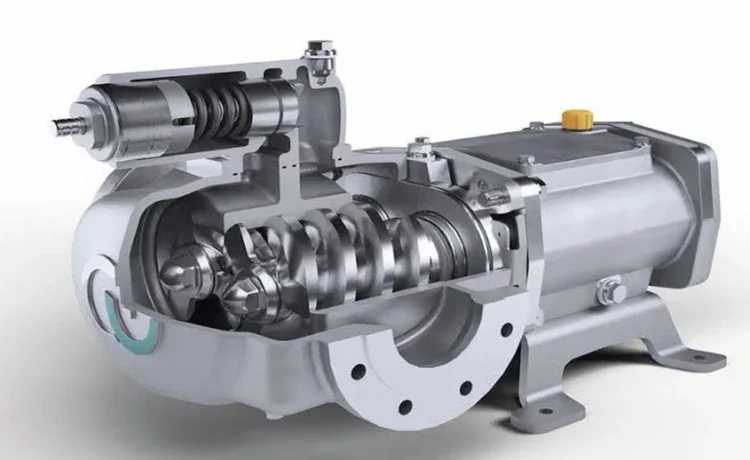
Twin screw pumps use two intermeshing screw rotors that counter-rotate within a tight-tolerance housing. As the screws turn, fluid is trapped in the cavities formed between the screw threads and the housing wall, and is transported axially from the inlet to the outlet without pulsation. The intermeshing geometry creates a near-continuous seal between the inlet and outlet, allowing these pumps to handle both liquids and gases as well as two-phase fluid mixtures.
The twin screw design is inherently low-shear, making it particularly suitable for shear-sensitive products such as polymers, creams, emulsions, and biological fluids. The gentle action preserves product integrity whilst maintaining consistent flow rates even at higher viscosities. This combination of versatility and gentle handling is what drives adoption in demanding applications across multiple sectors.
Applications of Twin Screw Pumps in Industry
Twin screw pumps are used across a wide range of demanding industrial environments. Some of the most common application areas include:
- Crude oil transfer and multiphase boosting in upstream oil and gas operations
- Viscous chemical transfer including adhesives, resins, and polymer solutions
- Food-grade pumping of sauces, pastes, and high-viscosity dairy products
- Pharmaceutical manufacturing where shear sensitivity and hygiene are critical
- Fuel and lubricant transfer in marine and industrial engine systems
The oil and gas sector represents one of the largest application areas for twin screw pumps, particularly for multiphase boosting where gas and liquid travel together in the pipeline. Single-phase pumps are not equipped to handle these conditions reliably, but twin screw designs can accommodate gas volume fractions up to approximately 95 per cent in appropriate configurations.
How Single Screw Pumps Differ
Single screw pumps, also known as progressive cavity pumps, use a single helical rotor turning within a stator of corresponding geometry. The rotor’s eccentric rotation creates a progressing series of sealed cavities that carry fluid from inlet to outlet. Unlike twin screw pumps, single screw designs excel at pumping highly viscous, abrasive, or shear-sensitive fluids at lower flow rates.
Single screw pumps are widely used in wastewater treatment for pumping sludge, in the food industry for handling thick pastes and doughs, and in the oil industry for handling heavy crude oil with high solids content. The elastomeric stator is a key component that requires monitoring and periodic replacement, since wear against the rotor is unavoidable and accelerates with abrasive fluids.
Performance Comparison: Twin Screw vs Single Screw
In terms of flow range, twin screw pumps generally operate across a wider range of flow rates and pressures than single screw designs. Twin screw pumps also handle variations in fluid viscosity more predictably, maintaining consistent flow as conditions change. This makes them more suitable for applications where the fluid properties vary during the process cycle.
Single screw pumps have the advantage in applications requiring extremely gentle, pulsation-free handling of delicate or abrasive fluids at lower velocities. The progressive cavity principle delivers a very smooth, continuous flow that some applications require. For very high-viscosity fluids at moderate pressures, single screw pumps are often the more economical choice.
Selecting Twin Screw Pump Manufacturers
When specifying twin screw pumps, the choice of manufacturer matters beyond the pump specification itself. Key considerations include the availability of spare parts and the manufacturer’s stocking policy, the range of materials available for wetted components (stainless steel, Hastelloy, duplex stainless, and various seal face combinations), the manufacturer’s experience in the specific application, and the availability of technical support for commissioning and maintenance.
Indian-manufactured twin screw pumps have gained acceptance in international markets over the past decade, as domestic manufacturers have invested in precision machining capabilities and quality management systems aligned with international standards. For process industries in India seeking cost-effective alternatives to imported designs, reputable domestic twin screw pump manufacturers offer a combination of quality and lead time advantage that merits evaluation alongside established international brands.
Specifying Twin Screw Pumps: Key Parameters
When specifying a twin screw pump for an industrial application, the following parameters need to be defined accurately: flow rate range including minimum and maximum operating points, differential pressure across the pump, fluid viscosity range at the expected operating temperature, fluid temperature, presence of entrained gas and the expected gas volume fraction, and any special material requirements for wetted components.
Providing complete application data to twin screw pump manufacturers allows them to select the correct screw geometry, housing clearances, and bearing arrangement for the duty. Undersizing the pressure capability or specifying incorrect clearances for the fluid viscosity are the most common sources of premature failure in field-deployed twin screw pumps. Taking time to define the application thoroughly at the specification stage pays dividends throughout the equipment’s operating life.
After-Sales Support and Spare Parts Availability
For industrial pumps, the total cost of ownership extends beyond the purchase price to include the cost of spare parts, the availability of service engineers, and the downtime cost when the pump is out of service for maintenance. Twin screw pumps typically have fewer wearing components than single screw designs, but the precision machining required for twin screw components means that parts can be more expensive to replace when they do wear.
Indian twin screw pump manufacturers who maintain spare parts stock locally provide a significant availability advantage over imported designs that require lead times for component sourcing. For process industries where pump availability is critical to production continuity, confirming the manufacturer’s parts stocking policy and regional service coverage before purchase is a sound risk management step. Understanding concepts like twin screw pumps manufacturers helps in making better decisions in this field.
Keyword Frequency
| Keyword | Count | Status |
|---|---|---|
| twin screw pumps manufacturers | 1 | ✓ |
| single screw pumps | 6 | ✓ |
| single screw pump | 6 | ✓ |
| twin screw pumps | 14 | ✓ |
| twin screw pump | 19 | ✓ |